

Is Montessori Academically Rigorous?
One of the most common questions families ask when exploring Montessori education is simple: will my child be challenged academically?
It is an understandable question.
Many parents grew up in traditional classrooms where academic rigor was measured by homework, tests, grades, and the amount of work brought home each night. Montessori looks different, and when something looks different, it is natural to wonder whether children are receiving the same academic foundation.
The short answer is yes.
In fact, many families are surprised to discover that Montessori education is often more rigorous than traditional education. Not because children are asked to do more work, but because they are expected to understand it more deeply.
Rigor looks different in Montessori
Traditional education often measures progress by how well students can remember information and reproduce it on a test.
Montessori education focuses on something different: mastery.
Rather than moving an entire class through a curriculum at the same pace, Montessori guides work with each child individually, helping them build a strong understanding before advancing to the next level.
The goal is not simply to cover material. The goal is to truly learn it.
Understanding before memorization
Imagine two children learning fractions.
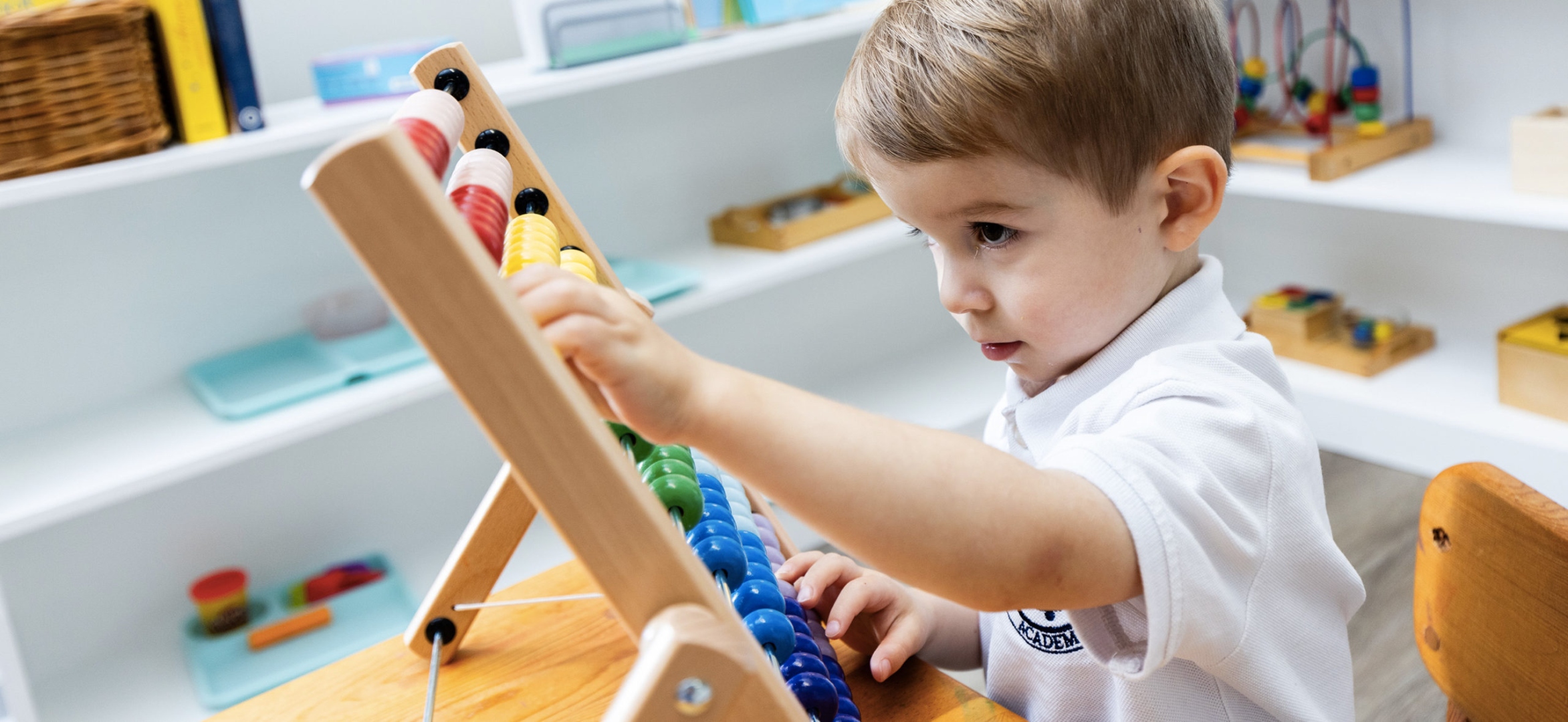
One memorizes procedures for adding and subtracting fractions. The other physically builds fractions, compares them, combines them, and explores how they work before moving to abstract calculations.
Both children may arrive at the correct answer. But one child understands why.
Montessori students spend significant time developing this deeper understanding. The result is a stronger academic foundation that supports future success in mathematics, science, writing, and critical thinking.
Children are challenged at their own level
One of the greatest strengths of Montessori education is that children are not limited by the pace of the group.
When a student demonstrates readiness for more advanced work, they can move forward. When additional practice is needed, they receive support and reinforcement.
This individualized approach allows every child to be appropriately challenged. Rather than teaching to the middle of the class, Montessori education meets children where they are and helps them grow from there.
Independence is an academic skill
Academic success is about more than subject matter.
Students must learn how to manage responsibilities, organize their work, solve problems, and persevere through challenges.
These skills, often called executive functioning skills, are developed every day in Montessori classrooms. Students learn how to plan their work, manage their time, complete assignments, and take ownership of their learning.
These habits often become some of the most valuable skills they carry into high school, college, and beyond.
Learning that goes deeper
Montessori classrooms encourage children to ask questions.
They investigate ideas, conduct research, make connections between subjects, and explore concepts from multiple perspectives.
Rather than simply memorizing information for a test, students learn how knowledge fits together. This depth of understanding creates confident learners who are prepared to tackle new challenges independently.
The Montessori difference
Montessori education is not designed to create students who simply perform well on tests.
It is designed to create students who understand, think, question, create, and contribute.
Academic rigor is not measured by how much homework a child completes. It is measured by the depth of understanding they develop and the confidence they gain as learners.
At AIA Montessori, we challenge students to think deeply, work independently, and take ownership of their education. Our goal is to help children develop both strong academic foundations and a lifelong love of learning.
Because success is not just about knowing the answers. It is about knowing how to learn.
Questions families ask us.
Will my child be challenged academically at AIA Montessori?
Yes. Students are continuously challenged at their individual level of readiness and encouraged to move forward as they demonstrate mastery.
Do Montessori students perform well after leaving Montessori?
Yes. Montessori students typically transition successfully because they have developed strong academic foundations, independence, responsibility, and problem-solving skills.
How do guides know if a child is making progress?
Progress is measured through observation, lessons mastered, student work, assessments, conferences, and ongoing communication with families.
Is Montessori easier than traditional school?
No. Montessori is rigorous in a different way. The emphasis is on deep understanding, mastery, independence, and critical thinking rather than memorization alone.
Families throughout Alpharetta, Johns Creek, Milton, Cumming, Suwanee, and surrounding communities often ask these questions as they explore Montessori education. At AIA Montessori, we encourage families to visit our classrooms and see Montessori learning in action.
About AIA Montessori
AIA Montessori is a nonprofit Montessori school in Alpharetta, Georgia, serving children from 18 months through Grade 8. Since 1981, AIA has helped children grow into confident, capable, and compassionate learners through authentic Montessori education.
Related articles.
Do Montessori Children Really Choose Their Own Work?
What freedom within limits really means in a Montessori classroom.
Why Montessori Doesn’t Rely on Grades, Tests, and Homework
How progress is measured when there is no red pen.
Why Montessori Classrooms Are Multi-Age by Design
Why children of different ages learn better together.
The best way to understand Montessori is to experience it.
We invite you to visit AIA Montessori and see our classrooms in action.
Book a Tour