

Do Montessori Children Really Choose Their Own Work?
One of the most common questions parents ask about Montessori is this: if children choose their own work, how do they learn what they need to know?
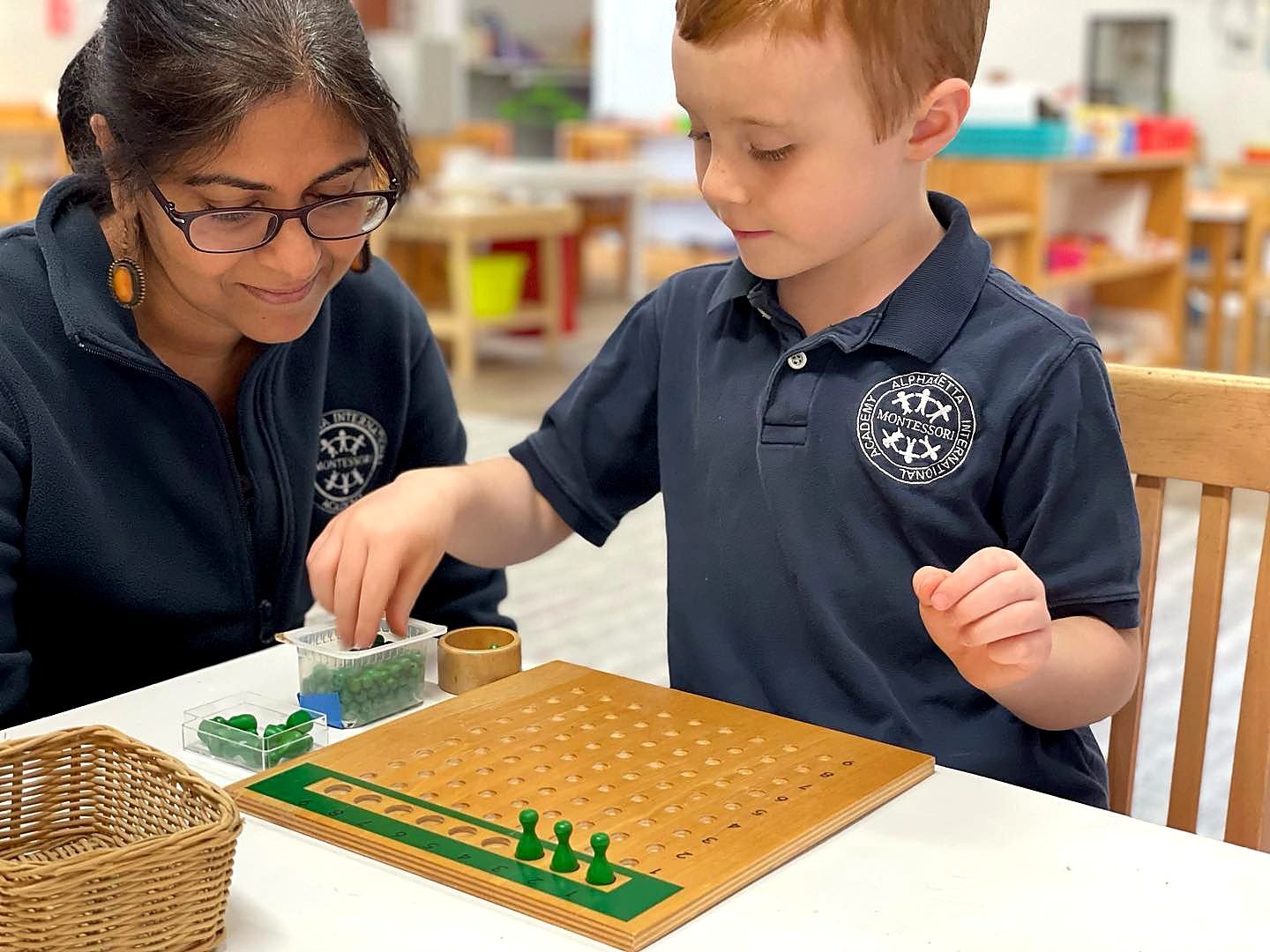
It is a fair question. To many people, Montessori can look very different from a traditional classroom. You will not see a teacher standing at the front of the room directing every child to complete the same lesson at the same time. Instead, you will see children working independently, in small groups, or with a guide, often choosing different activities throughout the morning.
At first glance, it may seem like children are simply doing whatever they want.
The reality is very different.
Montessori students enjoy freedom, but it is freedom within a carefully prepared environment, guided by clear expectations, purposeful lessons, and the expertise of a trained Montessori guide.
Freedom within limits
In Montessori, children are given choices because choice is one of the most powerful tools for learning.
Think about your own life. When you choose to do something, you are naturally more engaged, focused, and invested in the outcome. The same is true for children.
A Montessori classroom allows students to choose:
- Which lesson to work on from those they have already been taught
- Where to work within the classroom
- Whether to work independently or with a peer when appropriate
- How long to remain focused on meaningful work
What children do not choose is whether they learn.
Every child is expected to make academic progress, contribute to the classroom community, and engage with a wide range of subjects throughout the year.
The Montessori guide’s role
A common misconception is that Montessori guides simply step back and let children figure everything out on their own.
In reality, Montessori guides are constantly observing, planning, and supporting each child’s growth.
Rather than delivering one lesson to an entire class, guides work closely with individual students and small groups. They introduce new concepts when a child is ready, monitor progress, and ensure that each student is challenged appropriately.
The guide knows:
- Which lessons each child has mastered
- Which skills need reinforcement
- What new concepts are ready to be introduced
- Where additional support may be needed
Every choice a child makes happens within a framework that has been thoughtfully designed to support learning.
Why choice matters
Choice is not simply about making children happy. It serves an important educational purpose.
When children are given meaningful responsibility for their learning, they develop skills that will benefit them for life.
Independence
Children learn to manage their own time, materials, and responsibilities.
Concentration
Without constant interruptions, students learn to focus deeply on meaningful work.
Responsibility
Students discover that freedom comes with accountability.
Confidence
Making decisions and seeing the results helps children trust their own abilities.
These are skills that cannot be developed by simply following directions all day.
What happens if a child avoids certain subjects?
This is another common concern. Parents often wonder what happens if a child only wants to do art, or avoids math altogether.
This is where the Montessori guide’s expertise becomes essential.
Guides carefully track each child’s progress across all subject areas. If a child needs additional practice in mathematics, language, science, geography, or another area, the guide will present new lessons and ensure that appropriate work becomes part of the child’s learning plan.
Children have choice, but they are not allowed to permanently avoid important areas of learning.
The goal is balance: honoring a child’s interests while ensuring a well-rounded education.
What this looks like at AIA
At AIA Montessori, children experience increasing levels of independence as they grow.
Our youngest students learn simple choices, such as selecting activities from prepared shelves and caring for classroom materials.
As children move into Primary, Elementary, and Middle School, they take on greater responsibility for planning their work, managing projects, collaborating with peers, and setting goals.
Throughout the journey, our guides remain actively involved, providing lessons, encouragement, accountability, and support.
The result is a learning environment where students develop not only academic knowledge, but also the confidence and responsibility needed for success far beyond the classroom.
The bigger picture
The ultimate goal of Montessori is not simply to teach children facts. It is to help them become capable, curious, self-motivated learners.
When children learn how to make thoughtful choices, manage their responsibilities, and take ownership of their education, they develop skills that serve them throughout high school, college, careers, and life.
Montessori students do choose their work.
But more importantly, they learn how to choose wisely.
Questions families ask us.
Do Montessori children have to complete required work?
Yes. Children have freedom within a structured framework and are expected to make progress across all subject areas.
How do guides know what each child is learning?
Montessori guides maintain detailed records, observe students closely, and regularly introduce new lessons based on each child's readiness and progress.
Can a child spend all day doing only one activity?
No. While children may spend extended time on work that interests them, guides ensure that students engage with a balanced range of subjects over time.
Does choice make children less prepared for the real world?
Quite the opposite. Learning to make decisions, manage responsibilities, and work independently prepares children for success in school, work, and life.
Families throughout Alpharetta, Johns Creek, Milton, Cumming, Suwanee, and surrounding communities often ask these questions as they explore Montessori education. At AIA Montessori, we encourage families to visit our classrooms and see Montessori learning in action.
About AIA Montessori
AIA Montessori is a nonprofit Montessori school in Alpharetta, Georgia, serving children from 18 months through Grade 8. Since 1981, AIA has helped children grow into confident, capable, and compassionate learners through authentic Montessori education.
Related articles.
Is Montessori Academically Rigorous?
Mastery over memorization, and where the rigor actually lives.
Why Montessori Doesn’t Rely on Grades, Tests, and Homework
How progress is measured when there is no red pen.
Why Montessori Classrooms Are Multi-Age by Design
Why children of different ages learn better together.
The best way to understand the classroom is to experience it.
Visit AIA Montessori and see how freedom, responsibility, and purposeful learning work together to help children thrive.
Book a Tour